


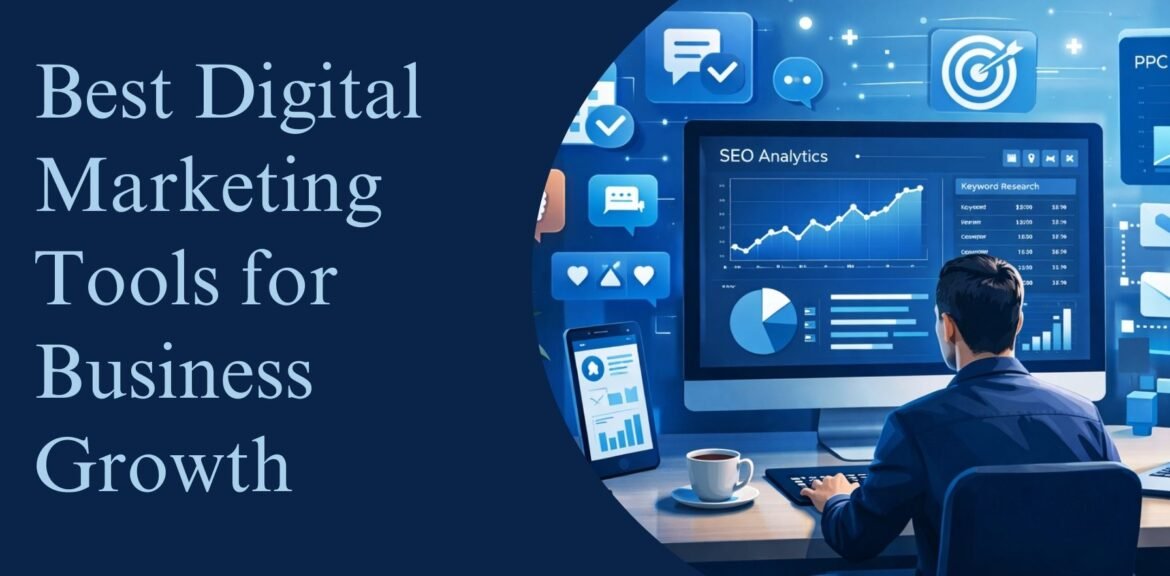

In today’s competitive online world, businesses must work smarter, not harder, to attract customers and grow revenue. This is where digital marketing tools become essential. From SEO tracking and content planning to social media management and performance analytics, the right tools help marketers save time while improving results. Whether you are a startup, small business owner, or marketing professional, choosing the right platforms can significantly improve campaign performance and ROI. In this guide, we’ll explore the most effective digital marketing solutions, how they work, and how you can use them strategically to boost visibility, engagement, and conversions.
Key Takeaways
- Digital marketing tools automate and simplify marketing tasks
- SEO, social media, PPC, and analytics tools work best together
- Data-driven decisions improve campaign performance
- Automation saves time and reduces manual effort
- Choosing tools based on business goals increases ROI
What Are Digital Marketing Tools?
Digital marketing tools are software platforms or applications that help businesses plan, execute, analyze, and optimize online marketing campaigns. These tools support activities such as:
- Search engine optimization (SEO)
- Content marketing
- Social media management
- Email marketing
- Paid advertising campaigns
- Analytics and reporting
Instead of managing everything manually, marketers use these tools to automate workflows, track performance metrics, and make smarter decisions based on real-time data.
Why Digital Marketing Tools Are Important
Modern marketing relies heavily on data and efficiency. Without proper tools, businesses struggle to measure performance or scale campaigns effectively.
Key Benefits
- Improve productivity through automation
- Track campaign performance accurately
- Understand customer behavior
- Optimize marketing strategies faster
- Increase return on investment (ROI)
Using the right digital marketing tools allows businesses to stay competitive while maintaining consistent brand visibility across multiple channels.
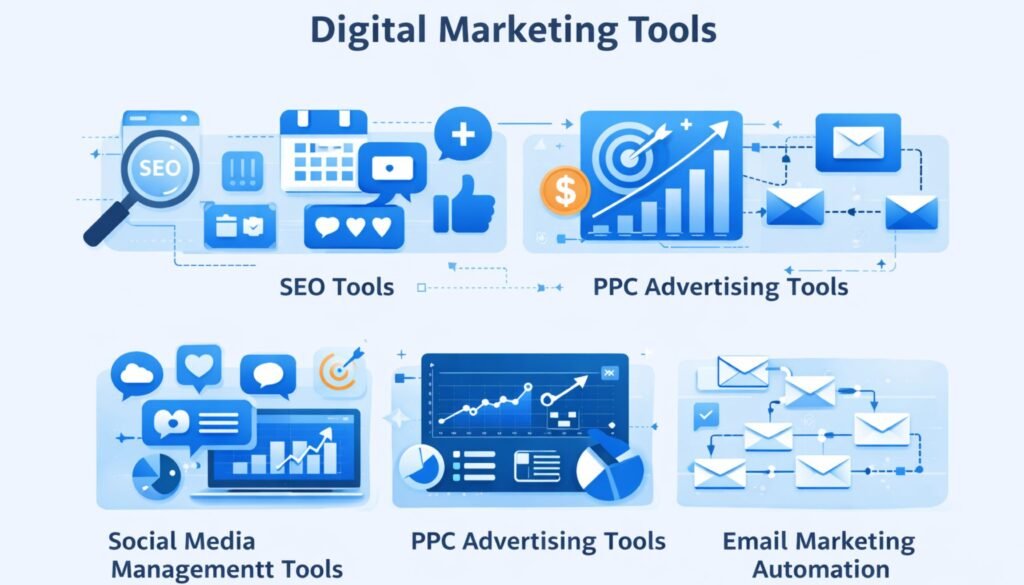
Essential Categories of Digital Marketing Tools
1. SEO Tools for Better Search Rankings
SEO tools help businesses improve their website visibility on search engines. They provide keyword insights, competitor analysis, and technical optimization suggestions.
Popular Features
- Keyword research and tracking
- Backlink monitoring
- Site audit reports
- Competitor analysis
- Rank tracking
Actionable Tip
Focus on long-tail keywords and monitor ranking changes weekly to identify opportunities quickly.
Related keywords: SEO software, keyword research tools, website optimization tools.
2. Social Media Management Tools
Managing multiple social platforms manually can be overwhelming. Social media tools help schedule posts, analyze engagement, and maintain consistency.
Benefits
- Schedule posts in advance
- Track audience engagement
- Monitor brand mentions
- Analyze campaign performance
Best Practice
Create a monthly content calendar to maintain consistency and improve engagement rates.
3. Content Marketing & Writing Tools
Content remains the backbone of online marketing. Content tools help marketers research topics, optimize readability, and improve SEO performance.
Key Functions
- Content planning and ideation
- Grammar and readability improvement
- SEO optimization suggestions
- Content performance tracking
High-quality content supported by digital marketing tools ensures better rankings and stronger audience trust.
4. Email Marketing Automation Tools
Email marketing continues to deliver one of the highest ROIs among digital channels.
Features to Look For
- Automated email sequences
- Audience segmentation
- A/B testing
- Performance analytics
Pro Tip
Personalized email campaigns significantly increase open and conversion rates.
5. PPC and Advertising Tools
Paid advertising tools help businesses manage campaigns efficiently across search engines and social platforms.
Advantages
- Budget tracking
- Conversion monitoring
- Audience targeting
- Ad performance optimization
Combining PPC platforms with analytics-focused digital marketing tools ensures better ad spending decisions.
6. Analytics and Reporting Tools
Data is the foundation of successful marketing strategies.
Metrics You Should Track
- Website traffic
- User behavior
- Conversion rates
- Bounce rate
- Campaign ROI
Analytics tools transform raw data into actionable insights that help marketers refine strategies continuously.
How to Choose the Right Digital Marketing Tools
Not every tool fits every business. Selecting the right solution depends on your goals, budget, and marketing maturity.
Step-by-Step Selection Guide
1. Define Your Goals
Decide whether you want more traffic, leads, sales, or brand awareness.
2. Identify Required Features
Choose tools that align with your marketing channels.
3. Check Integration Options
Ensure tools connect easily with your website and CRM.
4. Start with Essential Tools
Avoid buying too many tools initially.
5. Measure ROI Regularly
Evaluate performance monthly and optimize usage.
Best Practices for Using Digital Marketing Tools Effectively
Simply owning tools isn’t enough strategic usage matters.
Practical Tips
- Automate repetitive marketing tasks
- Monitor analytics weekly
- Optimize campaigns based on data
- Train your marketing team regularly
- Combine SEO, PPC, and social insights
Businesses that integrate multiple digital marketing tools into a unified strategy achieve faster and more sustainable growth.
Common Mistakes to Avoid
Many businesses invest in tools but fail to achieve results due to poor implementation.
Avoid These Errors
- Using too many tools simultaneously
- Ignoring analytics data
- Lack of strategy before tool selection
- Not updating campaigns regularly
- Focusing only on automation without creativity
Remember, tools enhance strategy they don’t replace it.
Future Trends in Digital Marketing Tools
The marketing technology landscape is evolving rapidly.
Emerging Trends
- AI-powered automation
- Predictive analytics
- Voice search optimization tools
- Advanced personalization technology
- Integrated marketing dashboards
Businesses adopting advanced digital marketing tools early gain a strong competitive advantage.
How Digital Marketing Tools Improve Team Productivity
One of the biggest advantages of using digital marketing tools is improved team efficiency. Marketing teams often handle multiple campaigns across SEO, social media, content, and paid advertising simultaneously. Without proper systems, managing tasks becomes time-consuming and error-prone. Marketing tools centralize workflows, allowing teams to collaborate, track progress, and automate repetitive activities.
For example, scheduling platforms reduce manual posting efforts, while analytics dashboards provide instant performance insights. This allows marketers to focus more on strategy and creativity instead of operational work. Businesses that streamline processes with automation tools often experience faster campaign execution and better overall results.
Integrating Digital Marketing Tools for Maximum Results
Using individual tools is helpful, but integrating them creates a powerful marketing ecosystem. When SEO tools, CRM systems, email platforms, and analytics software work together, businesses gain a complete view of the customer journey.
Integration Benefits
- Unified marketing data across channels
- Better audience targeting and personalization
- Improved lead tracking and nurturing
- Accurate performance measurement
To maximize results, businesses should connect their digital marketing tools through automation workflows. This ensures that customer interactions—from website visits to conversions are tracked efficiently, helping marketers make smarter decisions based on real-time insights.
Measuring Success with Digital Marketing Tools
Tracking performance is essential for long-term marketing success. The best digital marketing tools provide detailed reports that help businesses understand what works and what needs improvement.
Key Performance Indicators (KPIs) to Monitor
- Organic traffic growth
- Conversion rates
- Cost per acquisition (CPA)
- Engagement rates
- Customer lifetime value
Regularly analyzing these metrics helps businesses refine campaigns and allocate budgets more effectively. Instead of guessing marketing outcomes, companies can rely on data-driven strategies that continuously improve performance and ROI.
FAQ
What are digital marketing tools used for?
Digital marketing tools help businesses manage SEO, social media, email campaigns, advertising, and analytics efficiently while improving overall marketing performance.
Are digital marketing tools necessary for small businesses?
Yes. Even small businesses benefit from automation, performance tracking, and improved customer targeting provided by these tools.
How many digital marketing tools should a business use?
Start with 3–5 essential tools covering SEO, analytics, content, and social media, then expand as your marketing grows.
Do digital marketing tools improve ROI?
Yes. When used strategically, they provide insights that help optimize campaigns, reduce wasted spending, and increase conversions.
Conclusion
In a fast-paced digital landscape, success depends on efficiency, data, and smart decision-making. The right digital marketing tools empower businesses to automate tasks, understand audiences, and optimize campaigns for maximum impact. Whether your goal is higher search rankings, stronger social media engagement, or better advertising performance, investing in the right tools is a crucial step toward sustainable growth. Partner with a professional digital marketing team to implement powerful strategies, advanced tools, and data-driven campaigns that deliver real results. Start transforming your online presence today with expert digital marketing services designed for long-term success. Grow your business with result-driven strategies and expert solutions at wisdomdigitalmarketing.com.