





Every successful SEO strategy begins with one important step keyword research. Without choosing the right keywords, even high-quality content may fail to reach the right audience. A well-structured keyword research checklist helps businesses identify search opportunities, understand user intent, and create content that ranks on search engines. Whether you run a digital marketing agency, an ecommerce store, or a business website, following a proven process ensures consistent traffic growth. In this guide, you’ll learn a practical, step-by-step keyword research system that professionals use to improve visibility, attract qualified visitors, and increase conversions through smarter SEO decisions.
Key Takeaways
- Keyword research is the foundation of SEO success
- Understanding search intent improves rankings and conversions
- Long-tail keywords offer faster ranking opportunities
- Competitor analysis reveals hidden keyword gaps
- Keyword clustering helps build topical authority
- Regular monitoring ensures long-term SEO growth
What Is a Keyword Research Checklist?
A keyword research checklist is a structured process used to discover, analyze, and organize keywords before creating content or optimizing web pages.
Instead of guessing what people search for, marketers use data to:
- Identify audience needs
- Understand search behavior
- Plan SEO content strategically
- Improve organic rankings
Think of it as a roadmap that guides your entire content marketing and SEO strategy.
Why Keyword Research Matters for SEO
Search engines aim to deliver the most relevant results to users. When your content aligns with real search queries, Google understands your page better and ranks it higher.
Benefits include:
- Increased organic traffic
- Better audience targeting
- Higher engagement rates
- Improved conversions
- Stronger domain authority
Without a proper keyword research checklist, businesses often target competitive or irrelevant keywords that produce little return.
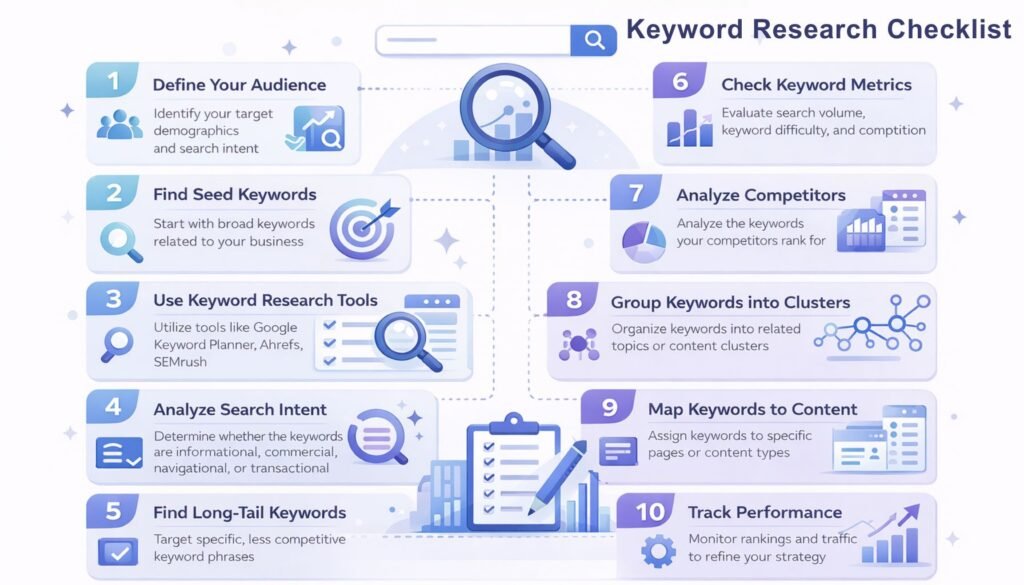
The Ultimate Keyword Research Checklist
Below is a step-by-step framework used by SEO professionals.
1. Define Your Goals and Target Audience
Before researching keywords, clarify:
- Who is your ideal customer?
- What problems are they trying to solve?
- Are you targeting awareness, leads, or sales?
Understanding your audience helps you choose keywords aligned with real intent rather than assumptions.
2. Identify Seed Keywords
Seed keywords are basic terms related to your services or industry.
Examples for digital marketing:
- SEO services
- digital marketing agency
- PPC management
- content marketing strategy
These keywords act as the starting point for expanding your keyword list.
3. Use Keyword Research Tools
Professional marketers rely on tools to collect accurate keyword data.
Popular options include:
- Google Keyword Planner
- SEMrush
- Ahrefs
- Ubersuggest
Look for:
- Search volume
- Keyword difficulty
- Competition level
- Trends over time
Using tools is a crucial step in any effective keyword research checklist.
4. Analyze Search Intent
Search intent explains why someone searches for a keyword.
Types of Search Intent
- Informational: learning something
- Navigational: finding a website
- Commercial: comparing options
- Transactional: ready to buy
Matching content with intent significantly improves rankings and user satisfaction.
5. Find Long-Tail Keywords
Long-tail keywords are longer, more specific phrases with lower competition.
Examples:
- keyword research checklist for beginners
- SEO keyword research guide for small businesses
- how to do keyword research step by step
Advantages:
- Easier rankings
- Higher conversion rates
- Targeted traffic
A strong keyword research checklist always includes long-tail opportunities.
6. Analyze Competitor Keywords
Study websites already ranking for your target keywords.
Check:
- Which keywords they rank for
- Content topics they cover
- Keyword gaps you can target
Competitor analysis helps uncover opportunities you may otherwise miss.
7. Evaluate Keyword Metrics
Not all keywords are worth targeting.
Focus on balance:
- Medium competition + good search volume
- Relevant to your services
- Matches business goals
Avoid choosing keywords solely based on high volume.
8. Group Keywords Into Clusters
Modern SEO works best with topic clusters rather than isolated pages.
Example cluster:
Main Topic: Keyword Research
- keyword research checklist
- keyword research tools
- keyword research strategy
- keyword research mistakes
This approach builds topical authority and improves internal linking.
9. Map Keywords to Content
Assign keywords to specific pages:
- Blogs → informational keywords
- Service pages → commercial keywords
- Landing pages → transactional keywords
Proper mapping prevents keyword cannibalization.
10. Optimize Content Properly
Once keywords are finalized:
On-Page Optimization Checklist
- Include keyword in title tag
- Use keyword in headings
- Write optimized meta description
- Add internal links
- Optimize images with alt text
Use the primary keyword naturally not excessively.
11. Track Performance and Update Regularly
SEO is ongoing.
Monitor performance using analytics tools:
- Ranking improvements
- Click-through rates
- Traffic growth
- Conversion data
Update content periodically to maintain rankings.
Common Keyword Research Mistakes to Avoid
Even experienced marketers make errors. Avoid these:
- Targeting only high-volume keywords
- Ignoring search intent
- Keyword stuffing content
- Skipping competitor research
- Not updating keyword strategy
Following a structured keyword research checklist prevents these issues.
Actionable Tips for Better Keyword Research
✔ Focus on user problems, not just keywords
✔ Combine SEO data with audience insights
✔ Use questions as keyword opportunities
✔ Optimize for voice search queries
✔ Build topic authority instead of single posts
How Keyword Research Supports Content Marketing Success
A strong content marketing strategy depends heavily on effective keyword research. When businesses understand what their audience is searching for, they can create blogs, guides, and landing pages that directly answer user questions. A well-planned keyword research checklist ensures that every piece of content serves a clear purpose instead of being published randomly. By aligning keywords with customer needs, brands can increase engagement, reduce bounce rates, and build trust with their audience over time. Consistent keyword-driven content also signals search engines that your website is an authoritative resource within your industry.
The Role of Keyword Research in Local SEO Growth
Keyword research is especially important for businesses targeting local customers. Adding location-based modifiers such as city names or service areas helps attract nearby users actively searching for solutions. For example, combining service keywords with geographic terms improves visibility in local search results and maps listings. A structured keyword research checklist helps identify local intent keywords, voice search phrases, and mobile-friendly queries that modern users frequently use. Optimizing for local searches not only drives traffic but also increases calls, inquiries, and walk-in customers.
How Keyword Clustering Improves Website Authority
Search engines now prioritize topic authority rather than isolated pages. Keyword clustering allows businesses to group related keywords and create multiple supporting articles around one main topic. Instead of targeting a single keyword repeatedly, marketers build a content ecosystem that strengthens relevance. Using a keyword research checklist helps organize primary, secondary, and supporting keywords into logical clusters. This strategy improves internal linking, enhances user navigation, and increases the chances of ranking for multiple related search terms simultaneously.
Future Trends in Keyword Research and SEO
Keyword research continues to evolve as search engines become smarter. AI-driven search, voice assistants, and conversational queries are changing how users search online. Modern SEO strategies now focus on intent, semantic keywords, and natural language rather than exact keyword repetition. Following an updated keyword research checklist helps marketers adapt to these changes by identifying emerging trends and optimizing content accordingly. Businesses that continuously refine their keyword strategy stay competitive and maintain long-term organic growth in an ever-changing digital landscape.
FAQ
What is a keyword research checklist?
A keyword research checklist is a structured process used to find and evaluate keywords before creating SEO content or optimizing web pages.
How often should keyword research be done?
Ideally every 3–6 months, or whenever launching new content, services, or campaigns.
Are long-tail keywords important for SEO?
Yes. Long-tail keywords usually have lower competition and higher conversion potential.
Can beginners perform keyword research?
Absolutely. With proper tools and a step-by-step checklist, beginners can build effective keyword strategies.
Conclusion
A well-planned keyword research checklist transforms SEO from guesswork into a strategic growth system. By understanding audience intent, analyzing competitors, targeting long-tail keywords, and organizing content effectively, businesses can achieve sustainable search visibility.
If you want faster rankings, higher traffic, and measurable business growth, professional keyword research makes all the difference.
Ready to grow your online presence? Partner with our digital marketing experts for advanced SEO strategies, data-driven PPC campaigns, and complete digital marketing solutions tailored to your business goals. Grow your business online with expert SEO, PPC, and digital marketing strategies designed to deliver real results with Wisdom Digital Marketing.