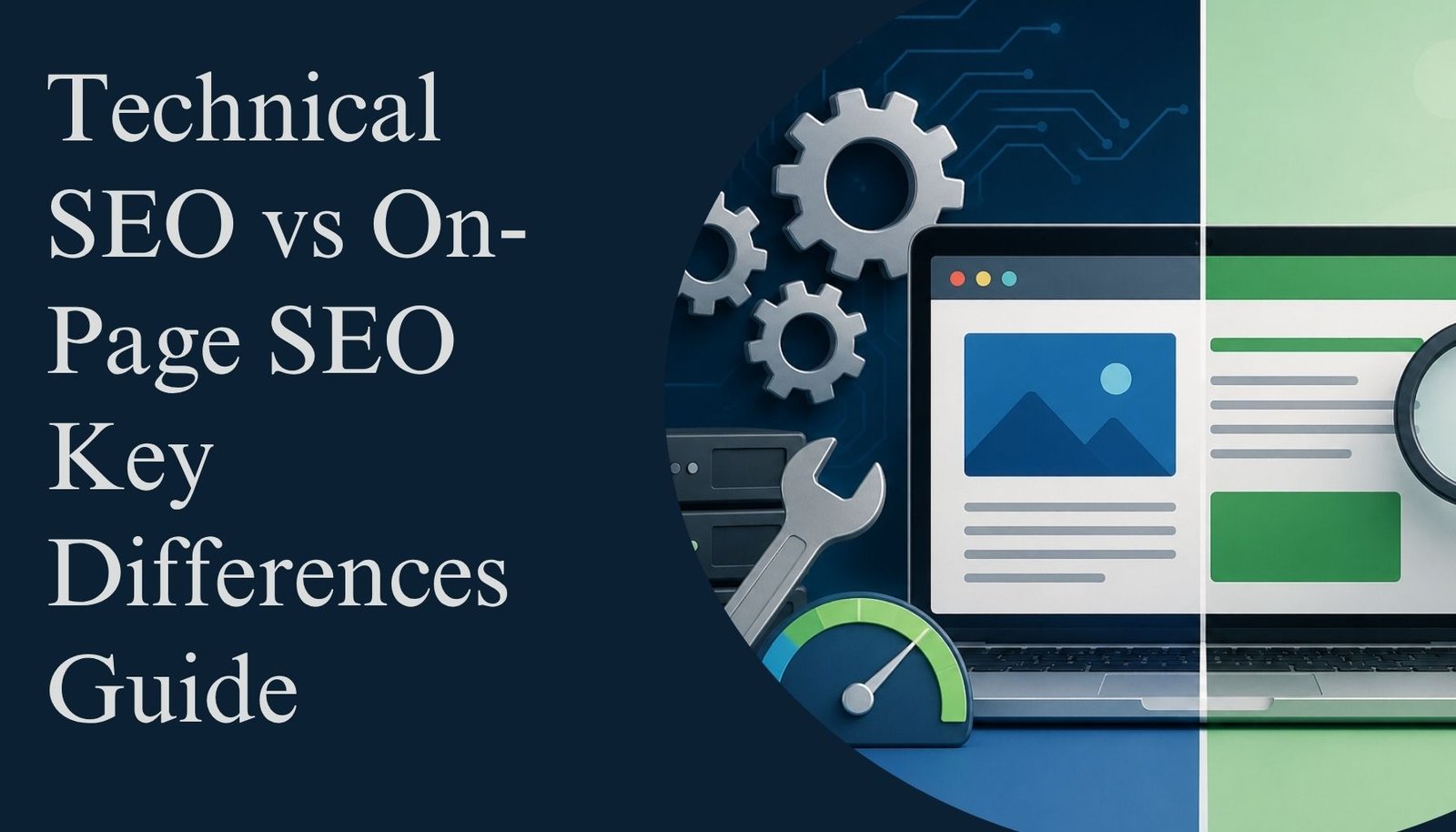




When it comes to improving your website’s visibility on search engines, understanding the difference between technical SEO vs on page SEO is essential. Both play a critical role in helping your website rank higher, attract organic traffic, and provide a better user experience. While technical SEO focuses on optimizing your website’s backend structure, on-page SEO deals with content and page-level improvements. Many businesses struggle to balance these two strategies effectively. In this guide, you’ll learn how both work, their key differences, and how combining them can create a powerful SEO strategy that drives real results.
Key Takeaways
- Technical SEO focuses on website performance, crawling, and indexing
- On-page SEO improves content, keywords, and user experience
- Both are equally important for higher rankings
- Ignoring either can limit your SEO success
- A combined strategy delivers long-term growth
What is Technical SEO?
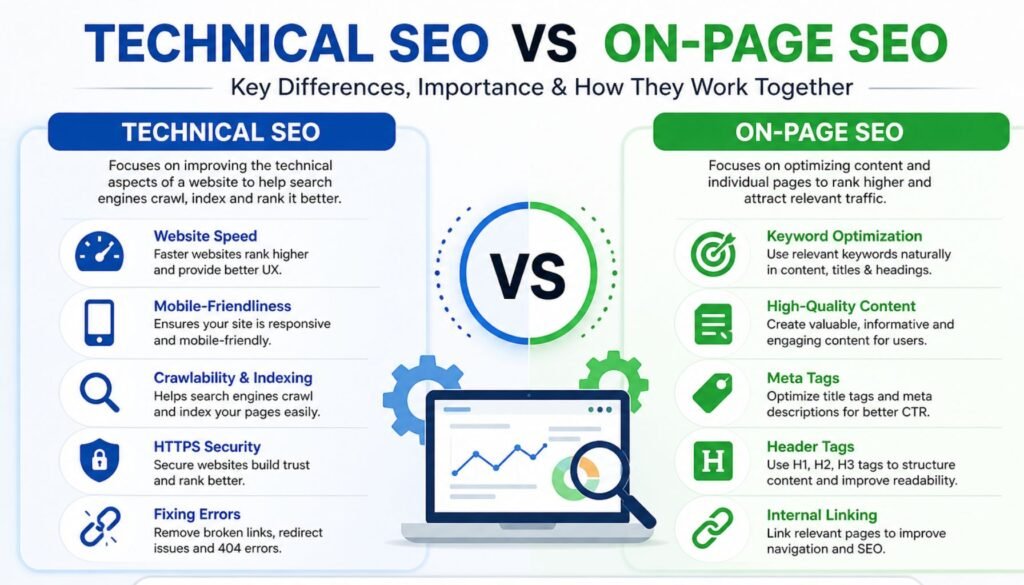
Technical SEO refers to optimizing your website’s infrastructure so that search engines can easily crawl, index, and understand your content.
Key Elements of Technical SEO
1. Website Speed Optimization
- Faster websites rank better and reduce bounce rates
- Use compressed images and caching
2. Mobile-Friendliness
- Your site must work smoothly on mobile devices
- Responsive design is essential
3. Crawlability & Indexing
- Ensure search engines can access your pages
- Use XML sitemaps and robots.txt
4. Secure Website (HTTPS)
- Security is a ranking factor
- Builds trust with users
5. Fixing Broken Links & Errors
- Remove 404 errors and redirect issues
- Improve user experience
What is On-Page SEO?
On-page SEO focuses on optimizing individual pages to rank higher and attract relevant traffic.
Key Elements of On-Page SEO
1. Keyword Optimization
- Use keywords naturally in content
- Avoid keyword stuffing
2. High-Quality Content
- Content should be valuable, informative, and engaging
3. Meta Tags Optimization
- Title tags and meta descriptions improve click-through rate
4. Header Tags (H1, H2, H3)
- Helps structure content and improve readability
5. Internal Linking
- Connect pages to improve navigation and SEO
Technical SEO vs On Page SEO Key Differences
1. Focus Area
- Technical SEO: Website backend and performance
- On-page SEO: Content and user experience
2. Purpose
- Technical SEO ensures search engines can access your site
- On-page SEO ensures users find valuable information
3. Tools Used
- Technical SEO: Google Search Console, site audits
- On-page SEO: Keyword tools, content optimization
4. Impact
- Technical SEO improves crawlability and indexing
- On-page SEO improves engagement and rankings
Why Both Are Important
Understanding technical SEO vs on page SEO is not about choosing one over the other—it’s about combining both.
Without Technical SEO:
- Your website may not be indexed
- Slow performance can hurt rankings
Without On-Page SEO:
- Your content won’t rank for keywords
- Poor user experience reduces conversions
How to Combine Technical SEO and On Page SEO
Step-by-Step Strategy
1. Start with Technical Audit
- Fix crawl errors
- Improve site speed
2. Optimize Content
- Use primary and secondary keywords
- Write user-focused content
3. Improve Website Structure
- Use proper headings
- Add internal links
4. Monitor Performance
- Track rankings and traffic
- Update content regularly
Best Practices for SEO Success
Technical SEO Tips
- Use structured data
- Optimize Core Web Vitals
- Ensure clean URL structure
On-Page SEO Tips
- Write compelling headlines
- Use LSI keywords naturally
- Optimize images with alt text
Common Mistakes to Avoid
- Ignoring mobile optimization
- Keyword stuffing
- Slow-loading pages
- Duplicate content
- Broken links
Advanced Technical SEO Strategies for Better Performance
When diving deeper into technical SEO vs on page SEO, advanced technical strategies can significantly enhance your website’s performance. One of the most important factors is improving Core Web Vitals, which directly impact user experience and rankings. Optimizing loading speed, interactivity, and visual stability ensures that users stay longer on your site. Additionally, implementing structured data (schema markup) helps search engines understand your content better, increasing the chances of rich results in search listings.
Another crucial aspect is log file analysis, which allows you to see how search engine bots interact with your website. By identifying crawl issues and optimizing your crawl budget, you ensure that important pages are indexed faster. These technical improvements strengthen the foundation of your SEO strategy.
Content Optimization The Core of On-Page SEO
In the discussion of technical SEO vs on page SEO, content remains the heart of on-page optimization. Creating high-quality, user-focused content is essential for ranking success. Instead of simply adding keywords, focus on solving user queries and delivering value. Use LSI keywords and natural language to make your content more relevant and readable.
Additionally, optimizing content for search intent is critical. Whether users are looking for information, services, or products, your content should align with their needs. Proper formatting with headings, bullet points, and short paragraphs improves readability and keeps users engaged, which positively impacts SEO performance.
The Role of User Experience in SEO
User experience plays a vital role when comparing technical SEO vs on page SEO. A well-optimized website should not only rank well but also provide a smooth and enjoyable experience for visitors. Factors like easy navigation, fast loading speed, and mobile responsiveness contribute to better engagement and lower bounce rates.
Moreover, integrating clear calls-to-action, interactive elements, and visually appealing layouts can improve conversions. Search engines prioritize websites that offer value and usability, making user experience a key factor in both technical and on-page SEO success.
Future Trends in Technical SEO vs On Page SEO
As search engines evolve, the importance of balancing technical SEO vs on page SEO continues to grow. Emerging trends like AI-driven search, voice search optimization, and mobile-first indexing are shaping the future of SEO. Websites must adapt by focusing on conversational content, faster performance, and structured data implementation.
Additionally, search engines are becoming smarter at understanding context and user intent. This means businesses need to create more meaningful, high-quality content while maintaining a technically sound website. Staying updated with these trends will help you stay ahead of competitors and achieve long-term SEO success.
Why Technical SEO vs On-Page SEO Matters for Rankings
Understanding technical SEO vs on page SEO is essential if you want to achieve higher rankings on search engines. The combination of technical SEO vs on page SEO ensures that your website is not only visible to search engines but also valuable to users. While technical SEO helps search engines crawl and index your website efficiently, on-page SEO ensures that your content is optimized with the right keywords, structure, and relevance.
When businesses ignore the balance between technical SEO vs on page SEO, they often struggle with low rankings and poor traffic. For example, a technically sound website without optimized content will not rank for target keywords. Similarly, strong content without proper technical SEO can remain invisible in search results. That’s why focusing equally on technical SEO vs on page SEO creates a strong SEO foundation and improves overall website performance.
How to Build a Winning Strategy with Technical SEO vs On-Page SEO
To succeed in digital marketing, you need a clear strategy that combines technical SEO vs on page SEO effectively. Start by conducting a complete website audit to identify technical issues such as slow speed, broken links, and indexing problems. Once the technical side is optimized, shift your focus to on-page SEO by improving content quality, keyword placement, and internal linking.
A successful approach to technical SEO vs on page SEO also includes continuous monitoring and updates. SEO is not a one-time task; it requires regular improvements to stay competitive. By consistently working on both technical SEO vs on page SEO, you can boost organic traffic, improve user engagement, and increase conversions. This balanced strategy ensures long-term success and helps your website stay ahead in search engine rankings.
FAQ
What is the main difference between technical SEO vs on page SEO?
Technical SEO focuses on backend improvements like speed and indexing, while on-page SEO focuses on content and keyword optimization.
Which is more important: Technical SEO vs On Page SEO?
Both are equally important. Without technical SEO, your site may not be visible, and without on-page SEO, it may not rank.
How often should I update my SEO strategy?
SEO should be monitored regularly and updated every few months based on performance and algorithm changes.
Can I do SEO without technical knowledge?
You can start with on-page SEO, but technical SEO requires some expertise for better results.
Conclusion
In the debate of technical SEO vs on page SEO, the real winner is the strategy that combines both effectively. Technical SEO builds a strong foundation, while on-page SEO drives traffic and engagement. Ignoring either one can limit your growth and rankings.
If you want to achieve long-term success, you need a balanced SEO approach that covers both technical performance and content optimization.
For professional SEO services and expert guidance on technical SEO vs on page SEO, visit our website: wisdomdigitalmarketing.com and take your digital growth to the next level