




Search behavior has changed dramatically in recent years. People no longer rely only on traditional search engines to find products, services, or information. Today, users search on social media platforms, AI tools, video platforms, online marketplaces, voice assistants, and mobile apps. This shift has created a new digital marketing approach called search everywhere optimization.
Businesses that want to stay competitive must optimize their online presence across multiple platforms instead of focusing only on Google rankings. From YouTube and Instagram to AI-powered search tools and eCommerce platforms, brands need visibility wherever their audience searches. In this guide, you will learn how search everywhere optimization works, why it matters, and how businesses can use it to improve traffic, engagement, and conversions.
Key Takeaways
- Search behavior now extends beyond traditional search engines
- Search everywhere optimization improves visibility across multiple platforms
- AI search, voice search, and social media search are growing rapidly
- Content optimization should focus on user intent and platform-specific strategies
- Businesses using omnichannel SEO gain better traffic and brand authority
- Consistent branding and optimized content improve customer trust
- Multi-platform visibility helps increase conversions and long-term growth
What Is Search Everywhere Optimization?
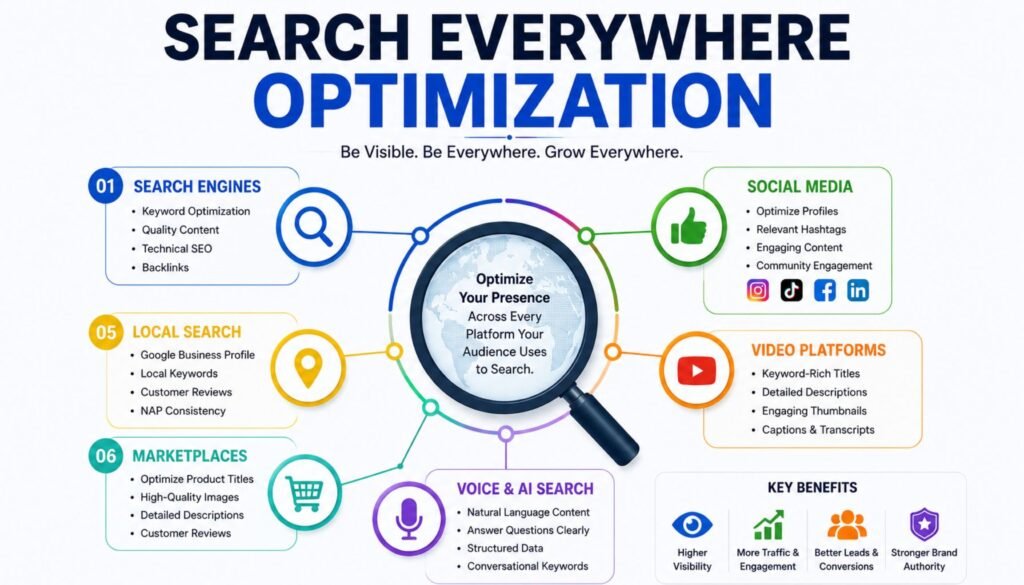
Search everywhere optimization is the process of improving your brand visibility across all digital platforms where users search for information.
This includes:
- Search engines like Google and Bing
- Social media platforms like Instagram, TikTok, LinkedIn, and Facebook
- Video platforms like YouTube
- AI-powered search tools and chatbots
- Online marketplaces like Amazon
- Voice search assistants
- Mobile app search systems
Instead of relying on one traffic source, businesses create optimized content that appears wherever potential customers are searching.
Why Search Everywhere Optimization Matters
The Evolution of Search
Traditional SEO mainly focused on optimizing websites for Google rankings. While search engines still matter, user behavior has evolved.
Modern consumers search for:
- Product reviews on YouTube
- Restaurant recommendations on Instagram
- Tutorials on TikTok
- Answers from AI tools
- Products directly on Amazon
If your business only focuses on website SEO, you may miss a large portion of your audience.
Better Brand Visibility
Search everywhere optimization helps your business appear across multiple channels, increasing exposure and recognition.
Benefits include:
- Higher traffic from diverse sources
- Improved brand authority
- Increased customer trust
- Better lead generation
- More conversion opportunities
Core Components of Search Everywhere Optimization
1. Traditional SEO Optimization
Website SEO remains the foundation of digital marketing.
Key practices include:
- Keyword optimization
- Technical SEO improvements
- Mobile-friendly design
- Fast-loading pages
- Internal linking strategies
- High-quality content creation
A well-optimized website supports all other marketing efforts.
Important SEO Elements
On-Page SEO
- Optimized headings
- Meta descriptions
- Image alt text
- User-friendly URLs
Technical SEO
- XML sitemaps
- HTTPS security
- Schema markup
- Crawlability improvements
2. Social Media Search Optimization
Social media platforms are becoming powerful search engines.
Users now search for:
- Fashion trends on Instagram
- Business advice on LinkedIn
- Tutorials on TikTok
- Local businesses on Facebook
How to Optimize Social Media Content
Use Searchable Keywords
Include relevant keywords naturally in:
- Captions
- Bios
- Hashtags
- Video descriptions
Create Engaging Content
Short videos, carousels, and interactive posts perform better on most platforms.
Maintain Consistent Branding
Use consistent logos, colors, and messaging across all platforms.
3. AI Search Optimization
AI-powered search tools are changing how users find information online.
Modern AI systems prioritize:
- Clear answers
- Authoritative content
- Structured information
- Conversational language
Tips for AI Search Optimization
- Answer common user questions directly
- Use structured headings
- Add FAQ sections
- Create helpful, in-depth content
- Improve content readability
Businesses using search everywhere optimization must adapt their content for AI-driven search experiences.
4. Voice Search Optimization
Voice search continues to grow with smart devices and mobile assistants.
People use conversational phrases like:
- “Best SEO agency near me”
- “How does local SEO work?”
- “Top digital marketing services”
Voice Search Best Practices
- Use natural language
- Focus on question-based keywords
- Optimize for local SEO
- Improve website speed
- Create conversational content
5. Video Search Optimization
Video content is one of the fastest-growing search channels.
Platforms like YouTube rank videos based on:
- Titles
- Descriptions
- Watch time
- Engagement
- Keywords
Video SEO Tips
Optimize Video Titles
Use compelling, keyword-rich titles.
Add Detailed Descriptions
Include related keywords naturally.
Use Custom Thumbnails
Attractive thumbnails improve click-through rates.
Add Captions
Captions improve accessibility and keyword relevance.
The Role of Omnichannel SEO
Omnichannel SEO focuses on maintaining visibility across every customer touchpoint.
Why Omnichannel SEO Is Important
Customers interact with brands through multiple channels before making decisions.
A user may:
- Discover your brand on Instagram
- Watch your YouTube video
- Search your business on Google
- Visit your website
- Contact your business through social media
Search everywhere optimization ensures your brand appears consistently throughout this journey.
Content Strategies for Search Everywhere Optimization
Create Platform-Specific Content
Different platforms require different content formats.
Examples
| Platform | Best Content Type |
|---|---|
| Reels and carousel posts | |
| YouTube | Tutorials and reviews |
| Professional articles | |
| TikTok | Short engaging videos |
| Blog | Long-form SEO content |
Focus on User Intent
User intent is critical for multi-platform SEO success.
Types of search intent:
- Informational
- Transactional
- Navigational
- Commercial investigation
Create content that directly solves user problems.
Repurpose Content Across Platforms
One blog post can become:
- Social media posts
- Infographics
- Videos
- Email campaigns
- Short clips
Repurposing content improves efficiency and visibility.
Local Search Everywhere Optimization
Local businesses benefit greatly from search everywhere optimization.
Local SEO Strategies
Optimize Google Business Profile
Keep business information accurate and updated.
Encourage Customer Reviews
Positive reviews improve trust and rankings.
Use Local Keywords
Include city and service-based keywords naturally.
Create Localized Content
Write blogs and posts targeting local audiences.
Common Mistakes to Avoid
Ignoring Mobile Optimization
Most searches happen on mobile devices. Slow websites reduce rankings and conversions.
Posting the Same Content Everywhere
Each platform requires unique formatting and style.
Neglecting Analytics
Track performance using:
- Google Analytics
- Search Console
- Social media insights
- Conversion tracking tools
Overusing Keywords
Keyword stuffing harms readability and SEO performance.
Use the primary keyword naturally throughout the content.
Future Trends in Search Everywhere Optimization
AI-Powered Search Growth
AI-generated search results will continue expanding.
Businesses must create:
- Helpful content
- Expert-driven articles
- Structured answers
Visual Search Expansion
Image-based search is becoming more popular.
Optimize:
- Product images
- Alt text
- Visual branding
Personalized Search Experiences
Search engines increasingly personalize results based on:
- User behavior
- Location
- Preferences
Brands must focus on audience-specific content.
Actionable Tips for Businesses
Build a Strong Content Calendar
Plan content for:
- Blogs
- Videos
- Social media
- Email marketing
Consistency improves visibility.
Use Data-Driven Decisions
Analyze:
- Keyword performance
- Engagement metrics
- Conversion data
- User behavior
Invest in Technical SEO
Technical SEO strengthens your overall digital presence.
Important areas include:
- Core Web Vitals
- Website speed
- Structured data
- Mobile usability
FAQ
What is search everywhere optimization?
Search everywhere optimization is a digital marketing strategy focused on improving visibility across search engines, social media, AI platforms, video channels, and online marketplaces.
Why is search everywhere optimization important?
It helps businesses reach customers on multiple platforms, improve brand visibility, and increase traffic and conversions.
How is search everywhere optimization different from traditional SEO?
Traditional SEO mainly focuses on search engines, while search everywhere optimization includes social media, AI search, voice search, video platforms, and more.
Which platforms are important for search everywhere optimization?
Important platforms include Google, YouTube, Instagram, LinkedIn, TikTok, Amazon, AI search tools, and voice assistants.
Conclusion
The digital marketing landscape is evolving rapidly, and businesses must adapt to changing search behavior. Search everywhere optimization is no longer optional for brands that want sustainable online growth. Customers search across social media, AI tools, video platforms, voice assistants, and traditional search engines every day.
By implementing strong omnichannel SEO strategies, creating valuable content, and optimizing every digital touchpoint, businesses can improve visibility, attract qualified leads, and build long-term authority online.
If you want to grow your business with advanced SEO, PPC, and digital marketing strategies, partnering with an experienced digital marketing agency can help you stay ahead of the competition and maximize your online success. Transform your online visibility with expert SEO, PPC, and digital marketing solutions from Wisdom Digital Marketing helping businesses grow across every search platform.