


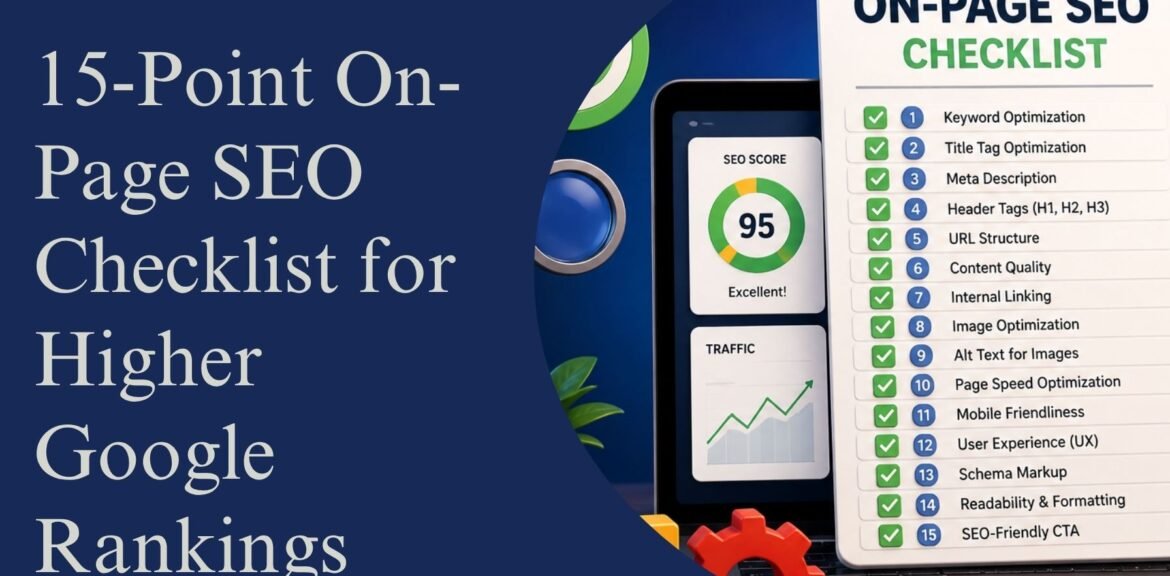

Ranking on Google is more competitive than ever. With millions of websites competing for attention, simply publishing content is not enough. You need a strategic on-page SEO checklist to ensure every page on your website is optimized for search engines and users alike.
On-page SEO involves optimizing the content, structure, and technical elements of individual web pages to improve visibility in search results. When implemented correctly, it can help increase organic traffic, improve user experience, and generate more leads for your business. Whether you run a small business website, an eCommerce store, or a corporate website, following this on-page SEO checklist can make a significant difference in your rankings. In this guide, we’ll cover 15 essential steps to help your website perform better on Google.
Key Takeaways
- Optimize title tags and meta descriptions.
- Use target keywords naturally.
- Create valuable and user-focused content.
- Improve page speed and mobile responsiveness.
- Optimize images and internal links.
- Enhance user experience.
- Conduct regular SEO audits.
Why On-Page SEO Matters
Search engines aim to deliver the most relevant and helpful content to users. On-page SEO helps Google understand what your page is about and whether it deserves to rank for specific search terms.
Benefits of proper on-page optimization include:
- Higher search engine rankings
- Increased organic traffic
- Better user engagement
- Improved conversion rates
- Enhanced website credibility
A structured on-page SEO checklist ensures that no critical optimization factor is overlooked.
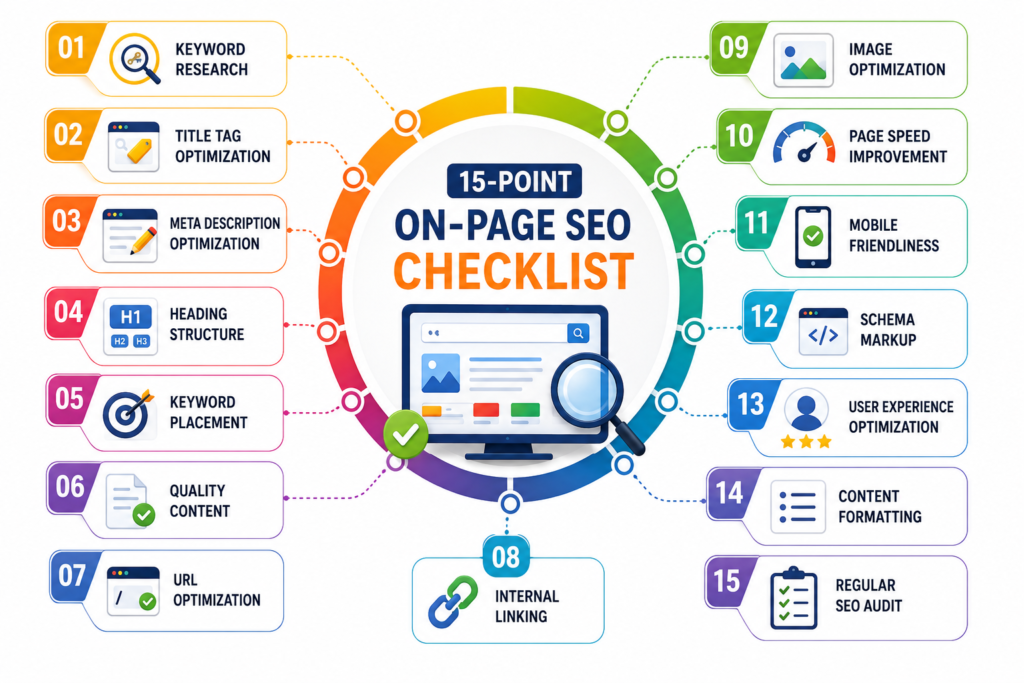
15-Point On-Page SEO Checklist
1. Conduct Thorough Keyword Research
Every successful SEO strategy begins with keyword research.
Identify:
- Primary keywords
- Secondary keywords
- Long-tail keywords
- Search intent
For this article, the primary keyword is on-page SEO checklist. Supporting keywords help search engines understand the broader topic and improve ranking opportunities.
2. Optimize Your Page Title
Your title tag is one of the strongest ranking signals.
Best Practices
- Keep it under 60 characters.
- Include the primary keyword.
- Make it compelling and clickable.
- Place important keywords near the beginning.
Example:
15-Point On-Page SEO Checklist for Higher Google Rankings
3. Write an Engaging Meta Description
Meta descriptions influence click-through rates.
Tips
- Keep between 150–160 characters.
- Include your target keyword.
- Highlight benefits.
- Encourage users to click.
A strong meta description can increase traffic even without improving rankings.
4. Use a Proper Heading Structure
Organized content is easier for both users and search engines to understand.
Recommended Structure
- H1 for the main title
- H2 for primary sections
- H3 for supporting topics
Clear headings improve readability and support your on-page SEO checklist efforts.
5. Place Keywords Naturally
Keyword optimization remains important, but overusing keywords can hurt rankings.
Include Keywords In
- Title tag
- First paragraph
- Subheadings
- Meta description
- Image alt text
- Conclusion
Always prioritize readability over keyword density.
6. Create High-Quality Content
Google rewards content that satisfies user intent.
Characteristics of Great Content
- Original
- Informative
- Well-researched
- Actionable
- Easy to read
Content should answer questions and provide real value to visitors.
7. Optimize URLs
Simple and descriptive URLs improve both usability and SEO.
Good Example
yourwebsite.com/on-page-seo-checklist
Avoid
yourwebsite.com/page?id=12345
Short URLs tend to perform better in search results.
8. Improve Internal Linking
Internal links help distribute authority throughout your website.
Benefits
- Better crawlability
- Improved user navigation
- Increased page authority
- Higher engagement
Link related blog posts and service pages whenever relevant.
9. Optimize Images
Images enhance user experience but can slow down your website if not optimized.
Image SEO Tips
- Compress image sizes.
- Use descriptive filenames.
- Add alt text.
- Choose modern formats like WebP.
- Enable lazy loading.
Optimized images contribute to a stronger on-page SEO checklist strategy.
10. Improve Page Speed
Website speed is a confirmed ranking factor.
Ways to Increase Speed
- Compress files
- Minify CSS and JavaScript
- Use caching
- Optimize hosting
- Reduce redirects
Faster websites improve user satisfaction and search performance.
11. Ensure Mobile Friendliness
Most searches now occur on mobile devices.
Mobile Optimization Checklist
- Responsive design
- Fast loading speed
- Readable fonts
- Easy navigation
- Touch-friendly buttons
A mobile-friendly website is essential for higher rankings.
12. Add Schema Markup
Schema markup helps search engines understand your content better.
Common Schema Types
- Article schema
- FAQ schema
- Local business schema
- Product schema
- Review schema
Schema can increase visibility through rich search results.
13. Optimize User Experience
Google increasingly evaluates user experience signals.
Improve UX By
- Using clear navigation
- Reducing clutter
- Creating easy-to-read layouts
- Adding clear calls-to-action
- Improving accessibility
Better user experience often leads to longer visit durations and lower bounce rates.
14. Use SEO-Friendly Content Formatting
Well-formatted content improves readability and engagement.
Formatting Tips
- Use short paragraphs.
- Add bullet points.
- Include numbered lists.
- Highlight important information.
- Break up long sections with headings.
These elements make content easier to consume.
15. Perform Regular SEO Audits
SEO requires continuous improvement.
Audit Areas
- Broken links
- Duplicate content
- Keyword rankings
- Mobile usability
- Core Web Vitals
- Technical SEO issues
Regular audits ensure your on-page SEO checklist remains effective over time.
Common On-Page SEO Mistakes
Avoid these mistakes that can hurt rankings:
- Keyword stuffing
- Duplicate content
- Missing title tags
- Slow-loading pages
- Poor mobile experience
- Weak internal linking
- Missing alt text
- Thin content
Correcting these issues can lead to noticeable ranking improvements.
Additional On-Page SEO Tips
If you want to outperform competitors, consider these advanced optimization techniques:
- Update old content regularly.
- Add FAQ sections.
- Improve dwell time with engaging media.
- Optimize for featured snippets.
- Target long-tail keywords.
- Use semantic keywords naturally.
Small improvements can produce significant SEO gains over time.
Frequently Asked Questions
What is an on-page SEO checklist?
An on-page SEO checklist is a collection of optimization tasks used to improve webpage rankings, usability, and visibility in search engines.
How often should I update on-page SEO?
Review important pages every three to six months to ensure content remains accurate, optimized, and competitive.
Is on-page SEO enough to rank on Google?
On-page SEO is essential, but combining it with quality backlinks, technical SEO, and content marketing delivers the best results.
What is the most important on-page SEO factor?
High-quality content remains one of the most important ranking factors, supported by proper keyword optimization and excellent user experience.
Conclusion
A comprehensive on-page SEO checklist is one of the most effective tools for improving Google rankings and driving sustainable organic traffic. By optimizing your titles, content, keywords, images, internal links, page speed, and user experience, you create a stronger foundation for SEO success.
Remember that SEO is an ongoing process. Search engine algorithms evolve, competitors improve, and user expectations change. Consistently applying these 15 on-page optimization strategies will help your website stay competitive and visible in search results. row Your Business Online with Wisdom Digital Marketing – Delivering Expert SEO, PPC, Web Development, and Digital Marketing Solutions That Drive Real Results.