





In today’s digital world, businesses compete not only through products or services but through valuable information. This is where content writing becomes a powerful marketing tool. High-quality content helps brands attract visitors, build trust, and improve search engine rankings. Whether you run a business website, blog, or eCommerce store, strategic content creation can drive long-term organic growth. A well-written article educates readers, answers their questions, and encourages action. This complete content writing guide will help you understand how to create SEO-friendly, engaging, and conversion-focused content that performs well in search engines and connects with your audience effectively.
Key Takeaways
- Content writing improves search visibility and brand authority
- SEO optimization helps content rank higher on Google
- User-focused writing increases engagement and conversions
- Structured formatting improves readability
- Consistent publishing builds long-term traffic growth
What is Content Writing?
Content writing is the process of planning, researching, writing, and optimizing written material for digital platforms. It includes blog posts, website pages, social media content, product descriptions, and marketing copy.
The goal is simple:
Provide value to readers while supporting business goals like traffic, leads, and sales.
Modern content writing combines creativity with SEO strategy to ensure content reaches the right audience at the right time.
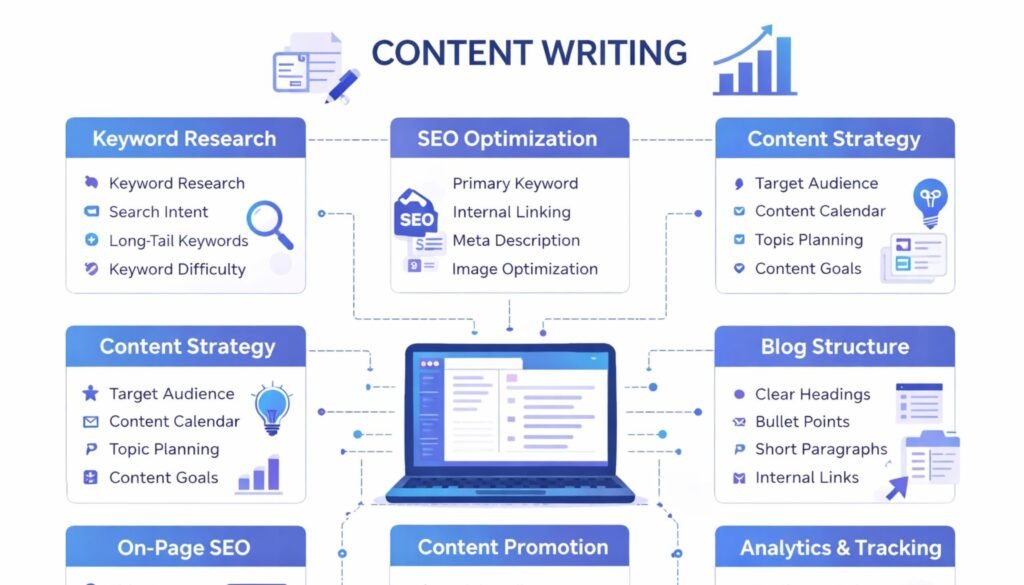
Why Content Writing is Important for Digital Marketing
Content acts as the foundation of online marketing. Without quality content, SEO, social media, and paid advertising cannot deliver strong results.
Key Benefits
- Improves search engine rankings
- Builds brand credibility
- Generates organic traffic
- Supports lead generation
- Enhances customer engagement
Search engines prioritize helpful and informative content. Businesses that invest in professional content writing consistently outperform competitors online.
Types of Content Writing
Understanding different formats helps you choose the right strategy.
1. Blog Writing
Educational articles designed to attract organic traffic through keywords.
2. Website Content
Homepage, service pages, and landing pages that explain your offerings clearly.
3. SEO Content Writing
Content optimized with keywords, internal links, and search intent alignment.
4. Social Media Content
Short, engaging posts designed to increase brand interaction.
5. Copywriting
Persuasive writing focused on conversions, ads, and sales pages.
Step-by-Step Content Writing Process
1. Keyword Research
Every successful content writing strategy begins with keyword research.
Focus on:
- Search intent
- Keyword difficulty
- User questions
- Long-tail keywords
Example related terms:
- SEO content writing
- blog writing services
- website content creation
- digital content strategy
2. Understand Your Audience
Ask yourself:
- Who is reading?
- What problems do they face?
- What solutions do they need?
Audience-focused content performs better than keyword-stuffed articles.
3. Create a Clear Structure
Good content is easy to scan.
Use:
- Headings (H1, H2, H3)
- Bullet points
- Short paragraphs
- Highlighted key ideas
A structured article improves both readability and SEO performance.
4. Write Engaging and Valuable Content
Effective content writing should:
- Solve problems
- Provide actionable tips
- Use simple language
- Maintain a conversational tone
Writing Tips
- Start with a strong hook
- Use examples and data
- Avoid complex jargon
- Write for humans first, search engines second
5. Optimize for SEO
SEO optimization ensures visibility.
On-Page Optimization Checklist
- Include primary keyword naturally
- Use secondary keywords strategically
- Add internal links
- Optimize headings
- Write compelling meta descriptions
Avoid keyword stuffing natural placement works best.
6. Edit and Proofread
Professional content always goes through editing.
Check for:
- Grammar errors
- Clarity and flow
- Keyword placement
- Readability score
Editing improves credibility and user experience.
SEO Best Practices for Content Writing
Use Search Intent
Understand whether users want:
- Information
- Comparison
- Solutions
- Services
Aligning content with intent increases ranking potential.
Write for Featured Snippets
Use:
- Lists
- Definitions
- Short explanations
- FAQs
Google often highlights structured answers.
Optimize Readability
Best practices include:
- Sentences under 20 words
- Paragraphs under 4 lines
- Clear subheadings
- Active voice writing
Readable content keeps visitors longer on your website.
Common Content Writing Mistakes to Avoid
❌ Keyword stuffing
❌ Writing without research
❌ Ignoring audience needs
❌ Poor formatting
❌ No call-to-action
High-performing content balances SEO strategy with user value.
Actionable Tips to Improve Your Content Writing
- Write consistently (1–2 blogs weekly)
- Focus on evergreen topics
- Update old content regularly
- Add visuals and examples
- Track performance using analytics
Consistency is the secret behind successful content marketing campaigns.
How Content Writing Supports SEO Growth
Content and SEO work together.
When you publish optimized articles:
- Search engines crawl more pages
- Keywords rank naturally
- Backlinks increase
- Authority improves over time
A strong content writing strategy creates sustainable organic traffic instead of relying only on paid ads.
Future Trends in Content Writing
Digital content continues to evolve.
Emerging Trends
- AI-assisted writing tools
- Voice search optimization
- Topic clusters and pillar pages
- Experience-driven content
- Personalized storytelling
Businesses that adapt to these trends gain a competitive advantage.
How to Create a Strong Content Strategy
A successful content strategy begins with clear goals and proper planning. Businesses should identify what they want to achieve through content writing, whether it is increasing website traffic, generating leads, or building brand authority. Start by defining your target audience and understanding their search behavior. When content aligns with user intent, it naturally performs better in search engines and keeps readers engaged longer.
Creating a content calendar is another important step. Planning topics in advance ensures consistency and helps maintain quality. Instead of publishing random articles, focus on creating topic clusters that connect related ideas and strengthen your website’s SEO structure. A well-organized strategy turns content into a long-term marketing asset.
The Role of Content Writing in Brand Building
Content writing plays a major role in shaping how audiences perceive your brand. Informative and well-written content positions your business as an industry expert. When users repeatedly find helpful information on your website, they begin to trust your brand and are more likely to choose your services.
Consistency in tone, messaging, and value delivery helps build a recognizable brand voice. Educational blogs, guides, and case studies allow businesses to demonstrate expertise while solving customer problems. Over time, strong content builds credibility, encourages sharing, and increases customer loyalty without aggressive promotion.
Content Promotion and Distribution Strategies
Publishing content is only the first step; promoting it effectively is equally important. After creating high-quality content, businesses should distribute it across multiple digital channels to maximize reach and visibility.
Effective promotion strategies include:
- Sharing blogs on social media platforms
- Sending content through email newsletters
- Repurposing articles into short posts or infographics
- Linking new content to existing website pages
- Encouraging audience engagement through comments and discussions
Content distribution ensures your efforts reach the right audience and generate consistent traffic beyond search engines.
Measuring Content Writing Performance
Tracking performance helps businesses understand what works and what needs improvement. Data-driven decisions allow marketers to refine their content strategy and achieve better results over time.
Key metrics to monitor include:
- Organic traffic growth
- Keyword rankings
- Average time on page
- Bounce rate
- Conversion rate
Using analytics tools, businesses can identify high-performing topics and optimize underperforming content. Continuous analysis and improvement are essential for maintaining long-term SEO success through content writing.
FAQs
What makes content writing SEO-friendly?
SEO-friendly content includes keyword optimization, structured headings, internal links, and valuable information aligned with user intent.
How often should businesses publish content?
Ideally, businesses should publish at least 2–4 high-quality articles per month for consistent SEO growth.
Is content writing important for small businesses?
Yes. Content writing helps small businesses compete with larger brands by improving visibility and authority online.
How long should a blog post be for SEO?
Most SEO blogs perform best between 1000–1500 words because they cover topics in depth and answer user queries completely.
Conclusion
Effective content writing is more than just writing words it’s about creating meaningful experiences that educate, engage, and convert readers. A well-planned content strategy improves SEO rankings, strengthens brand trust, and generates long-term business growth. By combining keyword research, audience understanding, and clear structure, businesses can produce content that delivers measurable results.
If you want professionally written, SEO-optimized content that drives traffic and conversions, partnering with an experienced digital marketing team can make all the difference.
Grow your business with expert content writing and digital marketing solutions from Wisdom Digital Marketing, designed to increase traffic, engagement, and conversions.